The Core Glycol Dilemma: Thermal Efficiency vs System Toxicity
The fundamental engineering choice between these two chemical bases comes down to a direct trade-off between pure thermodynamic power and environmental safety.
Ethylene Glycol (EG): High Thermal Performance per $
Ethylene Glycol serves as the industrial benchmark for high-velocity heat transfer efficiency. Characterized by its low molecular weight and compact molecular structure, EG exhibits lower fluid viscosity and significantly higher thermal conductivity than alternative glycol bases across all concentration gradients. This thermodynamic profile becomes exceptionally advantageous under extreme sub-zero operational demands, where fluid mobility is paramount. EG also provides a highly cost-effective solution to thermal transfer; because its global chemical manufacturing and raw commodity supply chains are scaled for massive industrial output, it yields a lower upfront per-litre material cost than equivalent propylene formulations.
The Thermodynamic Advantage: By maximizing heat transfer coefficients and minimizing internal fluid friction, EG allows engineering teams to design systems with optimized, smaller heat exchanger surface areas, downsized circulation pumps, and a vastly reduced electrical load across the lifecycle of the mechanical loop.
The Operational Constraint: Ethylene glycol carries a distinct acute oral toxicity profile. Consequently, its application is strictly confined to closed-loop systems completely isolated from potable water infrastructure, municipal plumbing configurations, or processing zones with proximity to food and beverage lines.
Propylene Glycol (PG): Low-Toxicity Risk Mitigation
Propylene Glycol is the specified industry standard for modern institutional, commercial, and high-occupancy or food-proximity building hydronics. Engineered to align with stringent health mandates, municipal building safety codes, and international food safety regulations, PG features an inherently non-toxic profile. This makes it the premier fluid base when facility design mandates absolute risk mitigation alongside uncompromised freeze and burst protection.
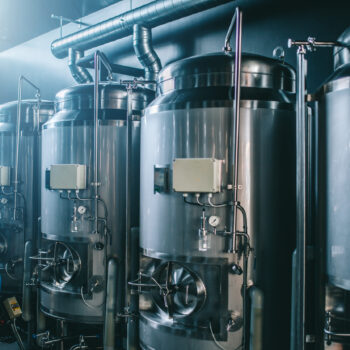
The Risk Advantage: PG provides total operational security for sensitive high-occupancy environments and regulated manufacturing zones. Because it can be blended using USP-grade base stocks, it is the only viable chemical choice for industrial refrigeration, cold-storage warehousing, microbreweries, and other food and beverage processing facilities. In these environments, it provides an essential layer of compliance security; if an accidental structural breach, gasket failure, or pinhole leak occurs within a heat exchanger, the fluid poses minimal toxicological risk to consumer products, personnel, or municipal wastewater systems, preventing catastrophic product recalls.
The Operational Constraint: Due to its higher molecular weight, PG possesses a more robust fluid viscosity curve than EG. At sub-zero temperatures, the fluid exhibits heightened flow resistance (drag), which requires mechanical engineers to account for increased pumping horsepower, greater ongoing operational energy consumption, and slightly oversized heat exchanger footprints to achieve equivalent cooling capacity.