Optimizing Fleet Logistics, Minimizing TCO, and Unifying Mixed-Asset Thermal Protection

For long-haul freight outfits, regional logistics providers, and mixed commercial transport yards, fleet management is a balancing act of operational uptime and maintenance overhead. Running a diverse, multi-tiered yard—ranging from high-displacement Class 8 highway tractors and vocational vehicles to medium-duty delivery vans and light-duty support trucks—traditionally creates an operational bottleneck in the maintenance bay.

Forcing a garage to stockpile multiple specialized, OEM-specific coolants introduces severe supply chain inefficiencies. More critically, it creates an environment highly susceptible to technician cross-contamination errors.

Advanced fleet management strategies prioritize chemical consolidation. Achieving a unified fluid standard across varying light, medium, and heavy-duty platforms demands a sophisticated chemical profile—one engineered to handle the extreme thermal loads and brutal seasonal temperature shifts characteristic of Western Canadian transport corridors.

The Logistical Case for Coolant Standardization

Minimizing operational variables is a fundamental pillar of modern fleet logistics. When a maintenance yard is responsible for mixed asset classes, multi-generational engine architectures, and varied metallurgy, standardizing on a singular, universally compatible coolant chemistry drastically simplifies preventative maintenance schedules and streamlines bulk procurement.

The viability of a unified fleet fluid relies on the architecture of Hybrid Organic Acid Technology (HOAT). Conceptually, a high-performance heavy-duty HOAT acts as a universal chemical bridge. By combining robust organic acid salts (for multi-year depletion resistance) with precisely metered, low-silicate inorganic inhibitors and azoles (for immediate surface passivation), this specific synergy interfaces cleanly with both legacy conventional fluids and modern, pure-OAT extended-life formulations.

Our flagship universal fluid combines organic acid salts with low-silicate inorganic inhibitors and azoles. By introducing a standardized, high-stability chemistry across a bulk inventory transforms fluid management from a reactive maintenance headache into a predictable, long-term asset protection strategy.

The Operational Lifespan of Our “One Fluid” Advantage

Heavy-Duty Diesel Infrastructure: Delivers a continuous service life of up to 1,000,000 kilometres (600,000 miles) or 12,000 operational hours under standard formal maintenance tracking.

Automotive & Light-Duty Support Fleets: Exceeds 5 years or 240,000 kilometres (150,000 miles) of continuous service in hot-shot trucks, delivery vans, and passenger vehicles.

The Technical Matrix: Understanding Global Heavy Duty Standards

To assist logistics procurement and maintenance directors in compliance modeling, the matrix below charts the rigorous industry benchmarks our universal coolant architecture satisfies. Rather than adjusting your inventory to fit separate vehicle categories, our single formulation satisfies both heavy-duty diesel mandates and light-duty automotive constraints simultaneously:

Engineering / ASTM Standard Targeted Fleet Profile Primary Chemical & Protection Mandate
ASTM D6210 / D6211 Heavy-Duty Fully Formulated Diesel Requires a pre-charged fluid containing specific levels of nitrites to protect wet-sleeve liners without adding initial SCAs.
ASTM D4985 Heavy-Duty Low-Silicate Base Demands aggressive low-silicate parameters to stop gelation and drop-out while retaining robust heavy-duty protection.
ASTM D3306 Automotive & Light-Duty Transport Focuses on high-speed heat transfer, anti-boil stability, and multi-alloy corrosion control for aluminum passenger platforms.
TMC of ATA RP 329 / 330 Long-Haul Trucking & Fleet Maintenance The technology council benchmark for ultra-extended lifecycle performance, stability, and scale mitigation in freight transport.

The Advanced Chemistry: Nitrite Precharging & Cylinder Liner Protection

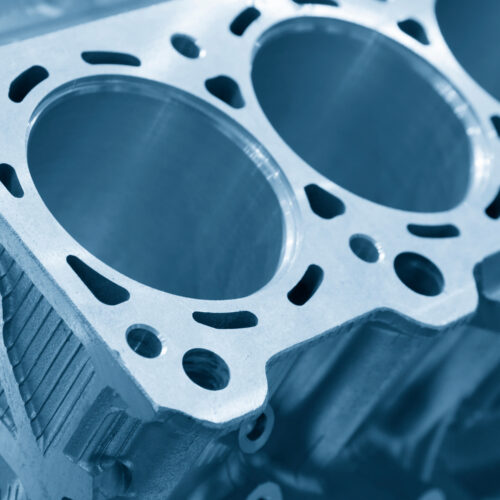
The primary failure point in high-output transport diesel engines occurs at the cylinder wall interface. High-frequency engine vibrations cause the surrounding coolant to undergo rapid, micro-second pressure drops, generating microscopic vacuum bubbles. When these bubbles violently collapse, they erode the metal, causing wet-sleeve cylinder liner pitting that can breach the cylinder wall and destroy the block.

To combat this without requiring constant manual adjustment with Supplemental Coolant Additives, our universal formulation is engineered with a minimum of 1200 ppm nitrites right out of the gate.

  • Active Surface Filming: This robust nitrite pre-charge immediately reacts with the iron cylinder walls, creating a resilient, microscopic passivation film that absorbs cavitation energy and neutralizes shockwaves before they pit the metal.

  • Sustained Reserve Alkalinity: Utilizing slowly depleting carboxylate and phosphono-carboxylic acid backbones, the fluid maintains a stable, permanent alkaline pH. This prevents the fluid from breaking down into organic acids under high thermal shear, extending the physical protection window across hundreds of thousands of highway kilometres.

  • Phosphate and Amine-Free Architecture: Eliminating phosphates guarantees total compatibility with hard Western Canadian blending water, entirely preventing the formation of calcium phosphate scale that restricts heat transfer across radiator tubes.

Fleet Maintenance Best Practices: The Danger of Coolant Mixing

While our universal HOAT fluid is designed for broad compatibility with conventional green and extended-life red coolants, maintenance yards must understand the chemical risks of uncontrolled cross-mixing.

When completely incompatible inhibitor chemistries are dumped into the same loop (such as mixing old-school high-silicate green fluids with standard pure OAT long-life fluids), it can trigger chemical drop-out. The inhibitors can fall out of suspension, turning into a thick, silicate gel that plugs heater cores, restricts radiator flow, and accelerates abrasive wear on water pump seals.

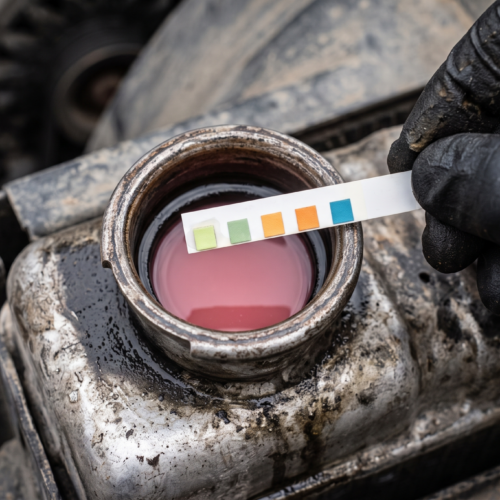
The Testing Protocol: To optimize your bulk fleet fluid conversion, our technical team recommends executing routine field testing using a dedicated optical refractometer to monitor precise freeze point margins, paired with periodic chemical test strips to verify nitrite levels and ensure your reserve alkalinity remains fully charged over the lifecycle of the vehicle.

For Universal Multi-Vehicle & Heavy-Duty Fleet Infrastructure


Global Extended Life HD (Universal HOAT Coolant)

Engineered as a true single-fluid mixed-fleet consolidator. This premium, low-silicate, phosphate and amine free Hybrid Organic Acid Technology (HOAT) is formulated with a robust, pre-charged nitrite level (minimum 1200 ppm). It provides immediate surface passivation to prevent wet-sleeve cylinder liner cavitation without the need for initial Supplemental Coolant Additives (SCAs).

This highly stable chemistry is fully compatible with both legacy conventional and modern organic acid coolants, securing a massive service life of up to 1,000,000 km (12,000 hours) in heavy-duty diesel engines and 250,000 km (5 years) in light-duty support vehicles.

Global Extended Life HD - HOAT Coolant - Hybrid Organic Acid Technology Antifreeze - Truck driving using HOAT Coolant

Not Sure Which Coolant Specification or Dilution Ratio Fits Your Fleet?

Selecting the wrong coolant technology or failing to match specific OEM requirements can lead to catastrophic wet-sleeve liner cavitation, premature water pump failures, or voided engine warranties. Our technical team is here to take the guesswork out of mixed-fleet maintenance.

Whether you need to calculate the precise freeze/boil protection concentration for a brutal Western Canadian winter route, or determine if your mixed-asset yard can successfully consolidate onto a single universal fluid, we provide the bulk supply and technical guidance your operation requires.

Explore the solutions above or contact our team for help building a system tailored to your fleet’s preventative maintenance program.

Learn More About Glycol Solutions & Industries

System thermodynamics, metallurgy, and chemical demands vary drastically depending on the operational environment. Dive deeper into the technical mechanics, fluid dynamics, and preventative chemistry engineered for each specific application field: